Soil degradation
Compaction, low permeability, lack of organic matter and weakened microbiology reduce the resilience of urban greenery.
ARBORA.ECO
Soil → Root → Tree → Space → Climate
Arbora develops a model that connects soil regeneration, functional root systems, large tree transplantation and long-term monitoring of urban spaces.
1. Summary
Urban and peri-urban spaces are increasingly exposed to climate pressure, soil degradation and the weakening of green infrastructure, reducing spatial functionality and quality of life.
Arbora responds with an integrated model combining regenerative soil restoration, root-space optimization, mature tree transplantation and digitally supported long-term monitoring.
2. Global context
Soil degradation, loss of ecosystem functionality and climate stress have become strategic challenges of urban development.
European strategic frameworks increasingly support nature-based solutions, ecosystem restoration and urban resilience.
3–6. Challenge
Compaction, low permeability, lack of organic matter and weakened microbiology reduce the resilience of urban greenery.
Limited soil volume and infrastructural pressure reduce tree vitality, stability and longevity.
The loss of healthy greenery intensifies urban heat island effects, worsens air quality and reduces comfort.
7. Arbora solution
Restoring physical structure, water regime, nutrient availability and soil microbiological activity.
Long-term ecological infrastructure in soil that improves water retention, aeration and carbon stability.
Planting pit design, structural soils and systems that increase functional volume for root development.
Fast establishment of shade, spatial identity and functional green infrastructure.
IoT sensors, remote sensing, AI analytics and digital twin support for long-term management and measurable impact.
Transplantation
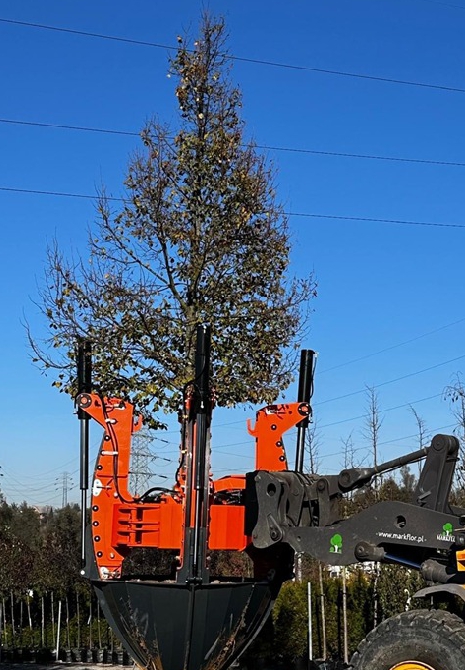
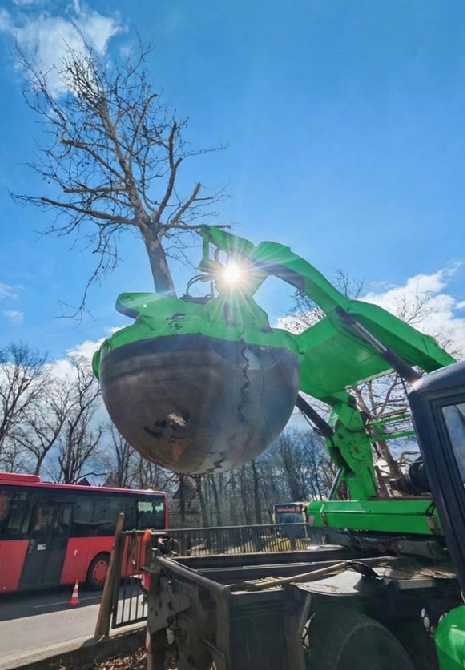
Mature trees provide instant shade, identity of space and a stronger perception of location quality.
Arbora develops models of preparation, transplantation, aftercare and coordination with partners and contractors.
Biochar
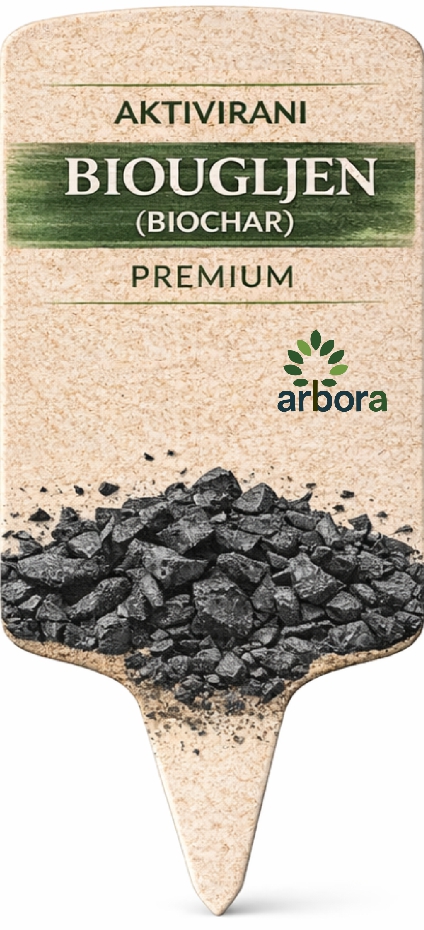
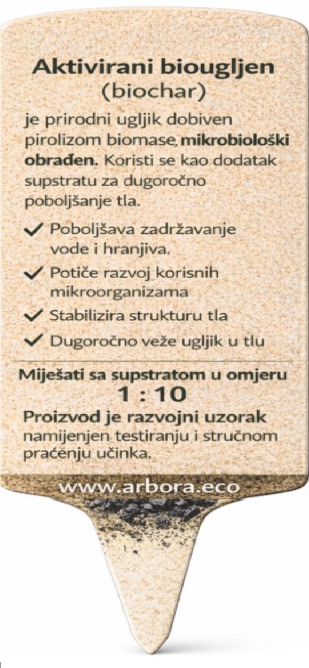
Natural carbon obtained through biomass pyrolysis, microbiologically treated, intended as a substrate additive for long-term soil improvement.
Mix with substrate at a ratio of 1 : 10
This product is a development sample intended for testing and professional monitoring of performance.
8. Arbora system
The Arbora model connects all levels of the urban ecosystem into a coherent and interdependent organism in which each intervention affects one or more links in the system.
9. Market opportunity
Public policy, European programs and the private sector are increasingly seeking solutions that combine climate adaptation, ecological restoration and measurable spatial impact.
10. Pilot projects
Resorts, camps, parks, hotel complexes and other representative spaces are ideal environments for demonstrating functional, reputational and market value.
Public and institutional engagement
Arbora also works through public education and institutional cooperation.
Explaining the importance of soil, roots, trees and microclimate.
Informing national, regional and local authorities about practical solutions.
Pilot projects, programmes and partnerships.
Urban ecosystem stabilization should become part of spatial planning.
11–12. Implementation and conclusion
The goal is not a one-off intervention, but a permanent, adaptive and data-based urban greenery management system.
Contact
For cities, developers, tourism complexes, investors and partners seeking measurable, scalable and long-term impact.